miracledesign.it

A new portfolio, designed by me and built with an AI agent.

The old miracledesign.it was a gallery of projects from 2016 to 2020. I redesigned it efficiently, updating it with the experience of recent years, and finally published it, directing everything with Claude Code.

Claude

The spec first, then the code.

Before writing a line, I wrote the rules. In a chat with Claude I set down positioning, audience, the three arguments to make (systems that last, design driven by research and data, a hybrid profile between design and code), the site map and the copy for every section.

The document becomes the single source of truth: the agent reads it first, and where a decision is still open it has to ask, not invent. Placeholders stay in square brackets until I have real data.

You give an agent rules, not just requests.

Claude Code

The loop: ask, look, correct.

The real work is a short loop. I ask for a change, look at it in the browser, then correct or approve it.

In a single evening there are 43 commits: logo, header, footer, archive, menu, CV page. Each commit is a small, reversible decision.

Many small visible steps instead of one big delivery.

Design direction

The choices that stayed mine.

The agent proposes, but design judgement can't be delegated. I often had to course-correct: on vocabulary, on readability, on how information was cut. Sometimes the agent wandered off, added more than needed or over-explained, and the job was to bring it back to the essentials.

  • The logo. The original file no longer existed: it was rebuilt as a vector from the old png. I had it corrected until the letters matched the original script.
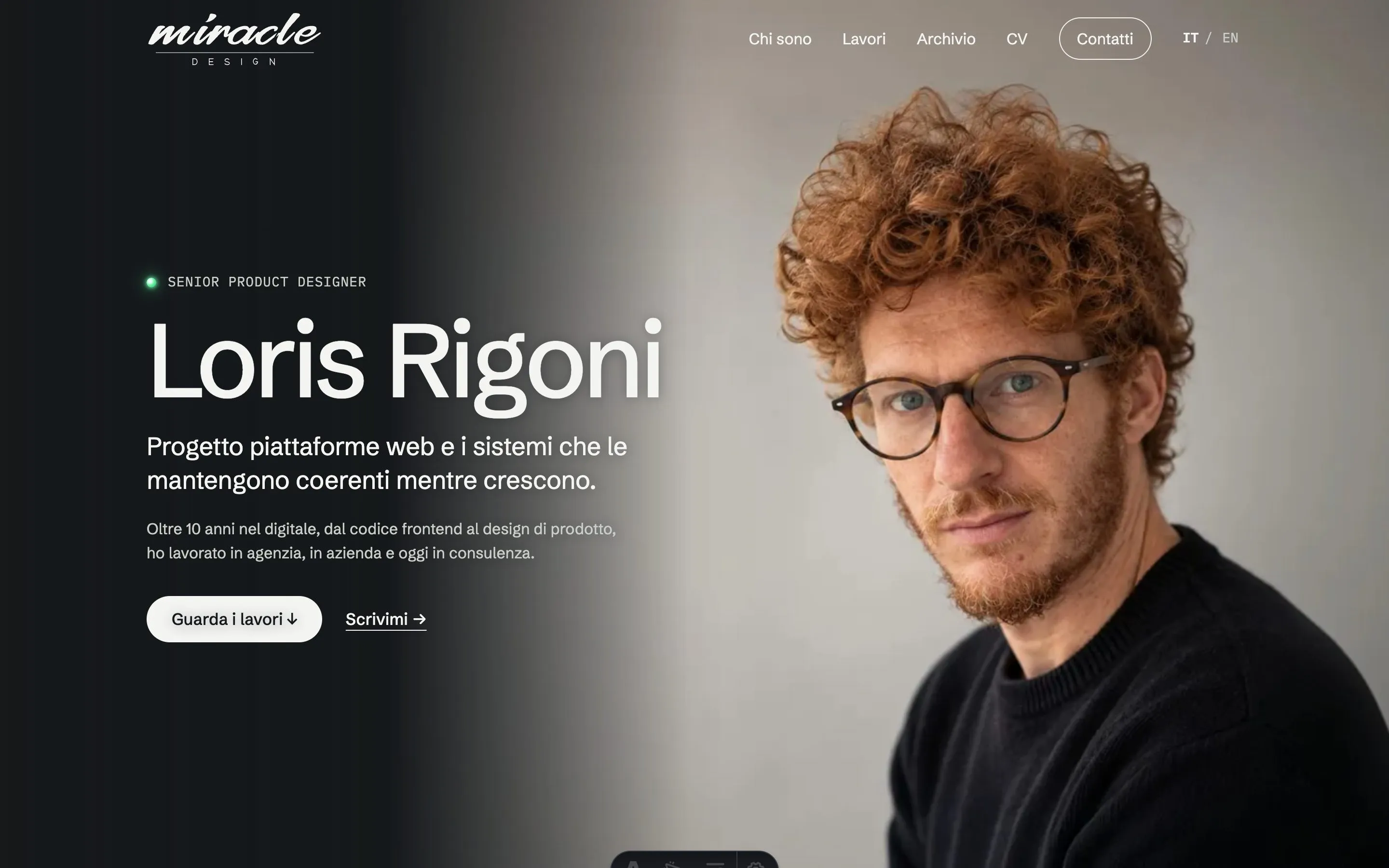
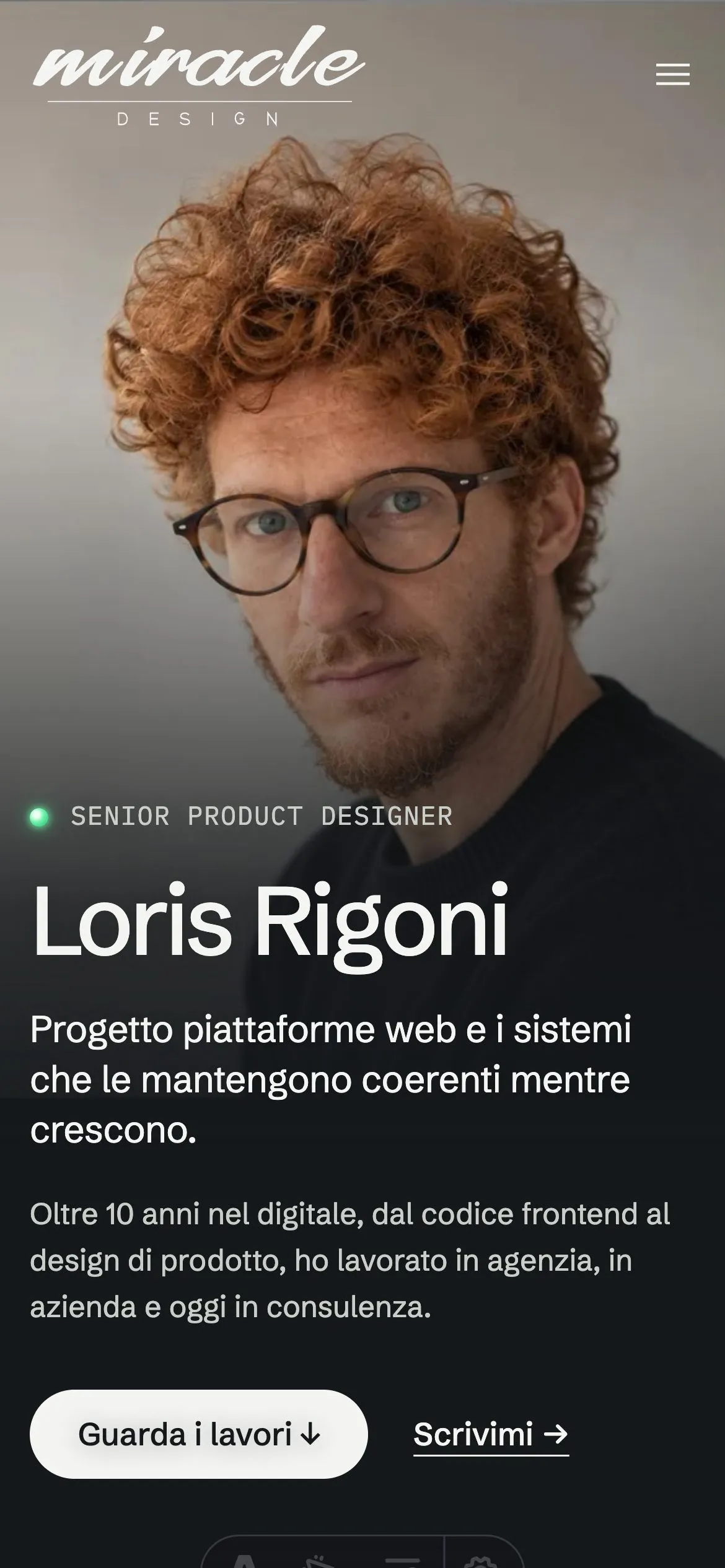
  • The Home opening. An early spec called for mentioning my path at Telepass and Dst right away. I went for a full-screen opening with more context, with my first and last name as the headline.
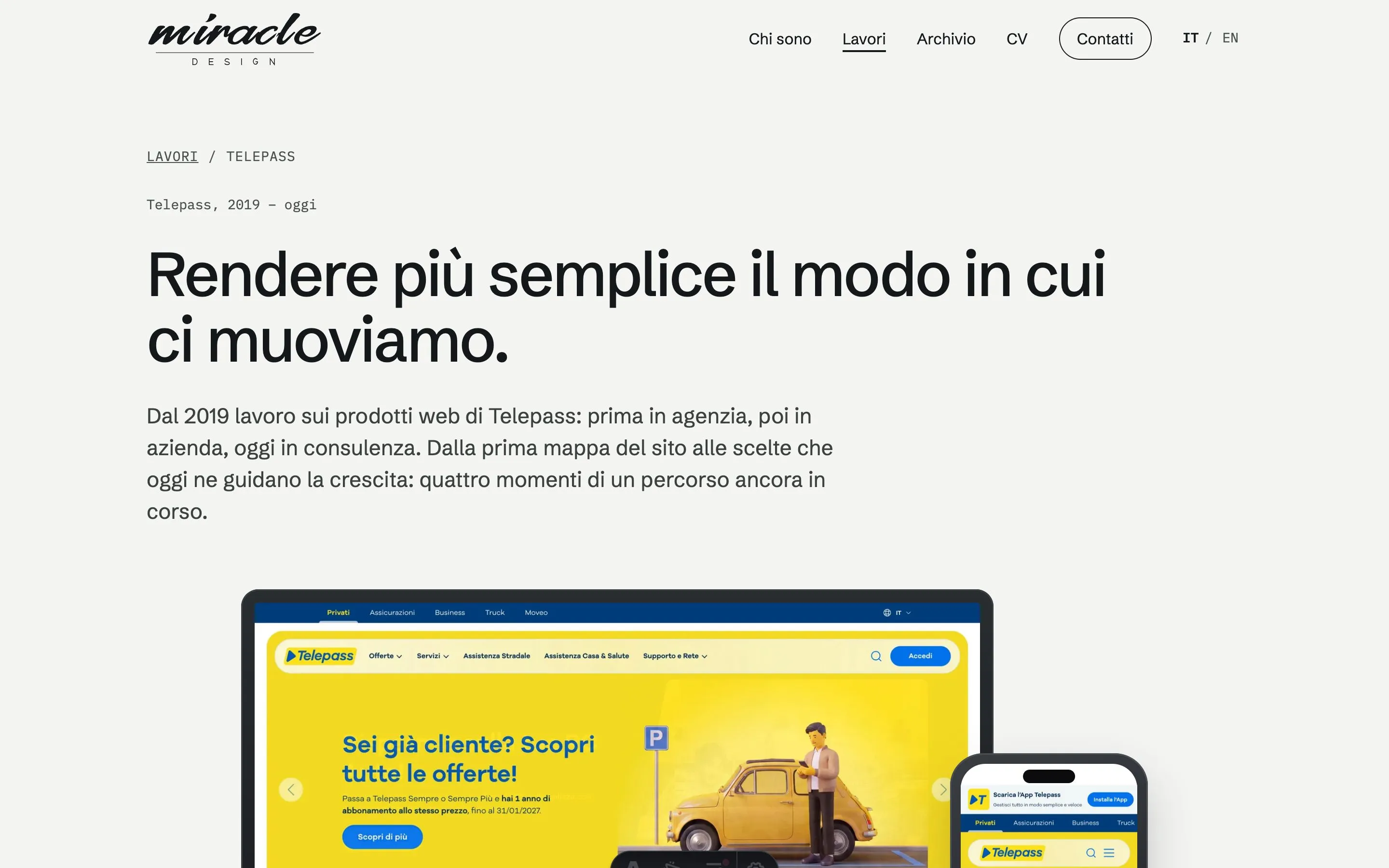
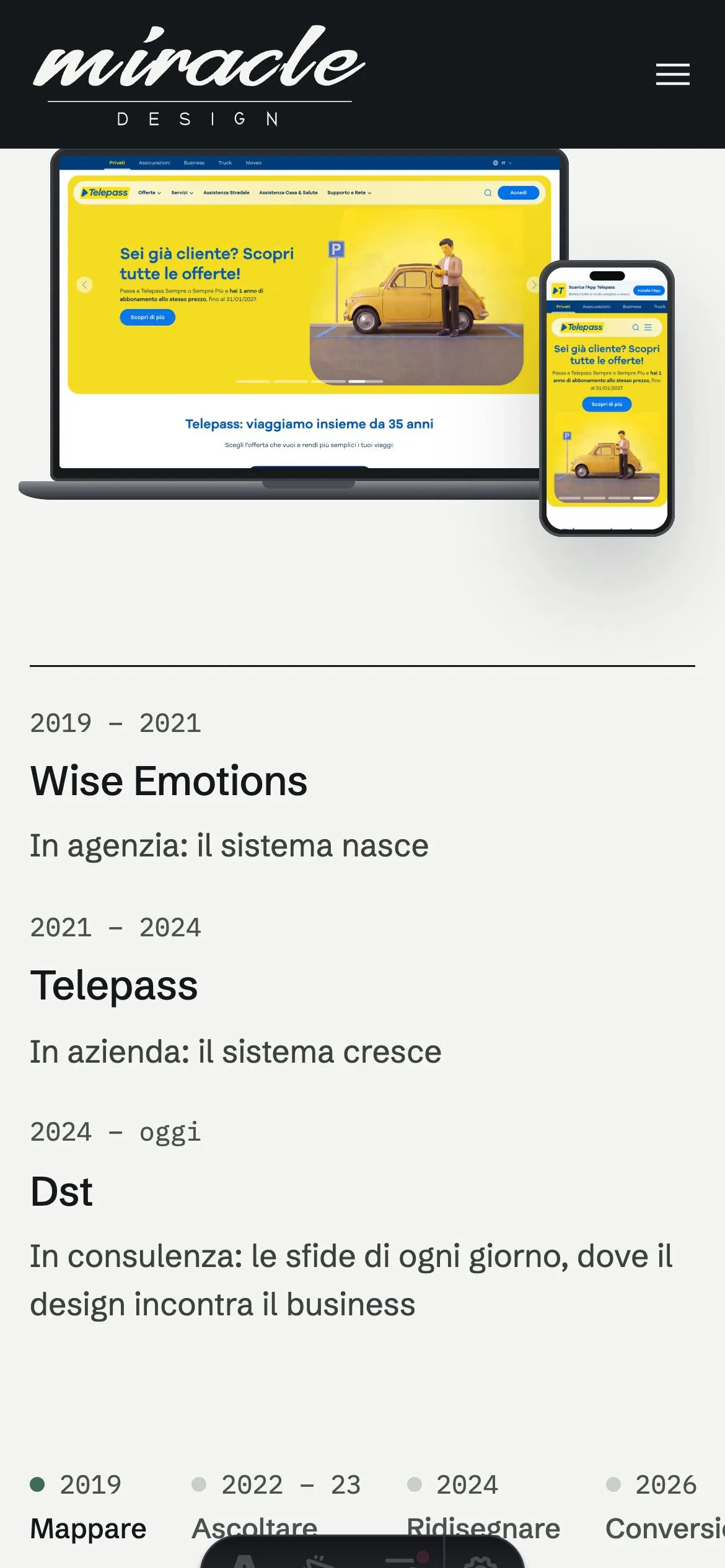
  • Telling the Telepass story. The initial mapping had a parent page and five chapters. Once built, it felt too fragmented: it became a single page with four moments and an index that follows the scroll.
  • Accessibility. Minimum contrast fixed on years and labels where the grey was too light.

AI speeds up execution, direction stays human.

GitHub Pages · Aruba

Going live without breaking anything.

The technical decisions were weighed against the systems already in use, with a touch of innovation:

  • Hosting. Netlify was set aside because on the free plan the site would stop once credits ran out; the existing Aruba FTP would have required authorising the IP address every time. The choice fell on GitHub Pages: free, and every commit is published automatically.
  • Domain and email. They stay on Aruba: I only changed the website records, without touching the email ones.
  • HTTPS. The certificate wouldn't issue: Aruba's DNS servers weren't in sync yet. We waited, then forced a new request.
  • Privacy. Google Analytics only starts after consent, with Signals and advertising data switched off in the code.

You don't need to write the code, you need to understand what you're deciding.

Google Analytics 4

Measuring.

A portfolio site without measurement is an opinion. With the agent I wrote a script that reads Google Analytics data every week and produces a short report: 5 numbers, 3 observations, 1 suggestion.

First week online: 39 visitors, almost a minute and a half each, the Telepass page read past 90% by 10 people. LinkedIn is the channel that brings the most visits after direct links. The data also showed what was missing: email clicks weren't being counted, so I added them.

Design, publish, measure, correct. Your own site included.

What I learned

For months I've seen, at work and across the digital world, how much AI is entering product work and above all design. I wanted to understand it by getting my hands dirty, not by hearsay.

  1. 01It needs a captain.The agent is fast and tireless, but it tends to wander. The value is in holding the course: what to say, to whom, in which words.
  2. 02The spec matters more than the prompt.The time spent writing the rules up front came back many times over.
  3. 03The role shifts towards strategy.Less time on execution, more time on positioning, content and choices. At this stage of my career, that's exactly the level I want to work at.